

I give every client
the PERSONAL
ATTENTION
they deserve
I like to establish a relationship with my clients so that we can achieve their individual goals together. Client's like to be included in the process and I always make sure they know what's going on and what to expect.

I am an AFFORDABLE
attorney who will
work tirelessly on
your behalf
The attorneys at Conway Law will work day and night to make sure everything gets done right, and on time. While offering exceptional services to our clients, we also offer very affordable rates and I always try to work with clients and their financial situations.

I make myself
AVAILABLE & take
pride in excellent
communication
I have always made myself available to my clients 24/7. You can call me anytime and I make myself available after hours and on weekends if needed.

I CONSTANTLY FIGHT
for my clients best
interest throughout
the case
A client's case is fought inside and outside of court. Whether we are in court, or negotiating a settlement, I will always have your interest first. I believe in my client's cases and will fight to achieve their individual goals.
Santa Rosa Divorce Lawyer
No-Fault Divorce in California
Deciding to end a marriage is one of the hardest decisions a person can face. Navigating the legal system can be challenging, even for those with extensive legal knowledge, and dealing with a divorce is a tough situation for anyone. While divorce is never simple, it can be made more manageable with the support of a compassionate divorce attorney from Conway Law Trial Attorneys, who can guide you through every step and protect your interests.
Let’s be honest: divorce isn’t for happy couples, and most start the process feeling hurt and betrayed. However, since California is a no-fault divorce state, a spouse can file for divorce anytime, citing “irreconcilable differences” as per Cal Fam. Code 2311. In California, property division in divorce cases isn’t influenced by either spouse’s actions, though child custody and visitation rights can be. This ensures a fair division of assets and prioritizes the well-being of any children involved. Understanding these laws can help ease some of the stress during this challenging time. Contact our Family Law Attorney for expert guidance.

I have a big heart and I care about people. I take a personal approach that shows my client’s that I am, and will be, there for them throughout their case.
ANDREW CONWAY
Read more
California Divorce Laws
Under Cal. Fam. Code 2335, evidence of wrongdoing or misconduct by either partner during the marriage is irrelevant and inadmissible in divorce proceedings. This ensures a focus on resolving practical issues rather than assigning blame.
Per California Family Code 2320, to obtain a divorce judgment in California, one spouse must have lived in the state for six months. Typically, the spouse filing for divorce must file in their county of residence, having lived there for at least three months before filing. If these conditions aren’t met, the family court might dismiss the case. This residency requirement helps maintain jurisdictional clarity and ensures the court’s decisions are based on consistent and fair guidelines. Understanding these legal nuances can help couples navigate the process more smoothly.
Read more
Client Reviews & Testimonials
“Since I practice in other areas of law, many of my clients have relied on me to refer them to other attorneys because I have earned their trust. I’ve always placed that trust in my fellow colleague, Andrew Conway because I know clients will be well represented...”
Colleague Review

“I typically don’t write reviews, but Andrew deserves one. Andrew is one of the hardest working men, I know. Thank you for standing with me when I needed and all your hard work. I would absolutely refer you to any one I know Because I know they will be taken care of. Thank you again”
Google Review
“I have been working with Andrew Conway for 10 years now. He has a big heart and his commitment to his clients is undeniable.”
Colleague Review
“...It was an easy choice to have Andrew as my lawyer. Our first meeting was at a coffee shop and I felt extremely comfortable talking with Andrew. Thank you Conway! I hope I never need you, but I’m super grateful that you are right there when I do.”
Yelp review
“Andrew is a professional, he knows law in and out and has helped me tremendously! I highly recommend him in any case.”
Google Review
“Andrew, thank you so much for all your hard work, dedication, and perseverance in this matter. I will recommend you to anyone I know, or meet, as one of the finest legal representatives available.”
In-house review
What Makes Andrew Conway Different From Other Attorneys?
I am always available, I try to return phone calls and text messages ASAP.
I care about my client and their situation. I make sure my client knows what’s going on with their case so they can feel comfortable during this very anxious and emotional time.
I have a true passion for fighting for the people who can’t fight for themselves.
I am a former resident of Guadalajara, Mexico & I am able to proudly represent the Spanish-speaking community.
I am a very personable person. I have a big heart and I care about people. I like to help someone feel a little bit better every day. You don’t typically get that in the Justice System.
I pay attention to, and satisfy my client’s needs. My client’s are not just another number. I will meet them after hours and on the weekends. I take a personal approach that shows my client’s that I am, and will be, there for them throughout their case.

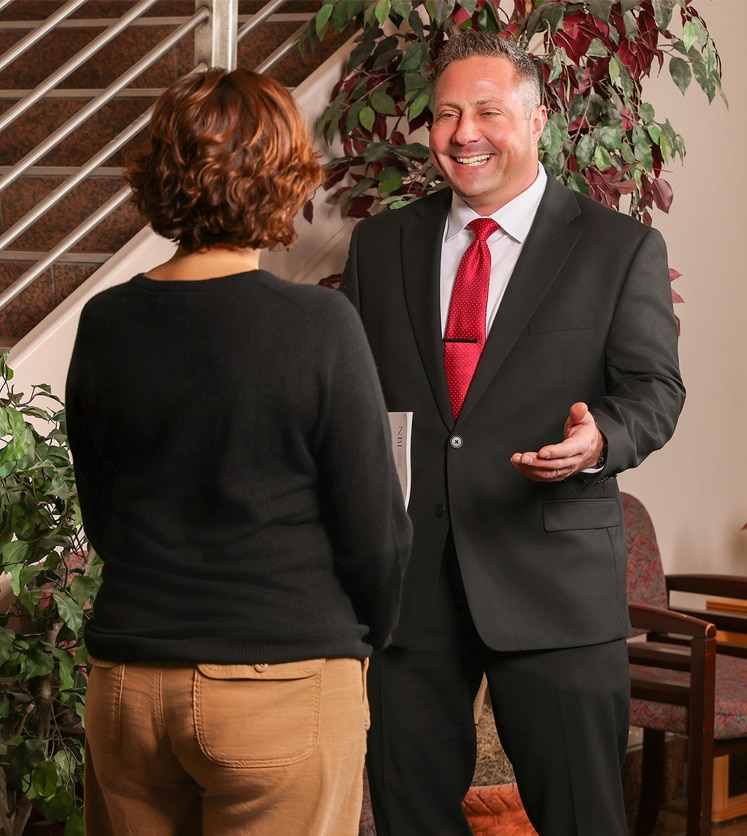 Meet Andrew
Your choices are...
Spend twice as much for an attorney;
an attorney who will probably only meet you in order to collect your retainer and never see or talk to you again.
Spend half the amount and hire me;
the attorney who will sit down with you, who will listen to your [entire] situation and position, who will work day and night to make sure everything gets done right and on time.
Legal Memberships & Awards





Divorce Attorney Serving Clients in Santa Rosa, CA
After filing a divorce petition, California law mandates a minimum wait of six months from the day the other spouse is served with the documents before finalizing the divorce. If a spouse doesn’t meet the residency requirements, they can apply for legal separation first and later amend the petition to request a divorce.
The Difference Between Divorce And Legal Separation
If you’re uncertain whether divorce is the right choice, you might consider legal separation as an alternative. In California, legal separation allows couples to live apart while remaining legally married, offering many of the same benefits as divorce without completely ending the marriage. This can be ideal for couples hoping to reconcile or wishing to retain benefits like family insurance policies. After a legal separation, you and your spouse remain legally married but cannot live together and may be eligible for child support and spousal maintenance.
Divorce might ultimately be the best option for you and your spouse, potentially making the process smoother if pursued later.
Contact Our Santa Rosa Divorce Lawyer Today
High-value properties, contested terms, child custody, and spousal support can all complicate a divorce. Hiring a Santa Rosa divorce attorney from Conway Law Trial Attorneys is the ideal way to manage these issues. While you focus on your future, your lawyer will negotiate your divorce settlement with your spouse and their legal team. Instead of dealing with paperwork or court appearances, you should go to work or spend time with your family. Rely on your lawyer to work on your behalf to achieve a fair and effective resolution.
While a lawyer can be beneficial in most divorce cases, if your divorce is straightforward and uncontested, you may not require one. If you and your spouse can amicably resolve key issues and draft an agreement that a judge can approve, legal representation may not be necessary. However, if you anticipate challenges in reaching a fair divorce settlement, such as disagreements over terms, hiring a lawyer is advisable. Additionally, if your spouse has already retained legal counsel, it’s a clear indicator that you should consider doing the same.
For expert guidance on your divorce case, seek advice from our Santa Rosa Divorce Attorney at Conway Law Trial Attorneys.


Frequently Asked Questions
How do I start a divorce in Sonoma County?
To start a divorce in Santa Rosa, you must file a petition with the Sonoma County Superior Court. As of January 1, 2026, couples who are in agreement can choose the new Joint Petition for Dissolution (Form FL-700). This collaborative path allows both spouses to file together as "Petitioner 1" and "Petitioner 2," avoiding the need for formal process servers and reducing initial conflict. For contested cases, the traditional process of filing and serving a Summons remains the standard.
Read our complete guide: Navigating the Sonoma County Family Court: A Step-by-Step Filing Guide
How long does it take to get a divorce in California?
The mandatory minimum for a divorce in California is six months (Family Code § 2339). This "cooling-off" period begins once the respondent is served or a Joint Petition is filed. While an uncontested Santa Rosa divorce often concludes shortly after this 6-month mark, contested cases involving child custody disputes or complex property division typically take 12 to 18 months due to court dockets and discovery requirements.
For a deeper look at the factors that speed up or slow down a case, read our guide: How Long Does a Divorce Take in Santa Rosa, CA?
What is considered community property in California divorces?
Under California Family Code § 760, community property includes all assets, income, and debts acquired by either spouse during the marriage while living in California. This includes real estate, retirement accounts, and even digital assets like cryptocurrency. Property owned before the marriage or received via gift or inheritance remains separate property, though it can become "commingled" if mixed with joint funds—a common issue that often requires forensic accounting to untangle.
Note: Identifying what is truly "community" vs. "separate" is often the hardest part of a divorce—especially when assets have been mixed over many years. For a checklist of what to look for and how to protect your interests, see our article: What You Need to Know About California’s 50/50 Rule.
How is debt divided in a California divorce?
Like assets, debts acquired during the marriage are considered community obligations and are usually divided equally between spouses. This includes mortgages, credit cards, car loans, and personal loans. A knowledgeable attorney can help ensure debts are fairly distributed under California law, especially in complex cases where debts exceed assets.
For a detailed breakdown of how specific loans are handled, read our guide: Marital Debt & Divorce: Who is Responsible for Credit Cards and Loans?
How is child custody decided in Santa Rosa divorces?
In Santa Rosa, child custody decisions are governed by the “Best Interests of the Child” standard (California Family Code § 3011). Sonoma County courts consider several key factors when determining both legal and physical custody, including:
- Health and Safety: The ability of each parent to provide a stable, safe environment.
- Co-Parenting Ability: Courts favor parents who demonstrate a willingness to foster the child’s relationship with the other parent.
- Child’s Preference: If a child is of sufficient age and maturity (typically 14 or older), the court may consider their wishes.
- History of Abuse: Any evidence of domestic violence or substance abuse heavily influences the final ruling.
Notably, Sonoma County courts often require mediation before a custody hearing can take place. This process allows a neutral third party to help parents reach an agreement outside of the courtroom.
For a detailed guide on preparing for mediation and understanding your rights, read our full article: How Child Custody Decisions Are Made in Santa Rosa, CA.
What are the grounds for divorce in California?
California is a "no-fault" divorce state, meaning you do not need to prove your spouse did something wrong to end the marriage. The most common ground is irreconcilable differences, which simply means the marriage has broken down and cannot be saved. Because fault is not considered, the court will not "punish" a spouse during property division or support awards for issues like infidelity.
For a deeper look at the legal grounds and exceptions, read our guide: Understanding No-Fault Divorce: Why "Why" Doesn't Matter in California Courts
Can spousal support be modified after divorce in Santa Rosa?
Yes. Under California Family Code § 4320, spousal support (alimony) can be modified or terminated if there is a "material change in circumstances." Common grounds for modification in Sonoma County include:
- Income Shifts: Involuntary job loss, a significant pay cut, or a substantial raise for either party.
- Cohabitation or Remarriage: If the receiving spouse remarries, support typically ends. If they begin cohabiting with a new partner, there is a "rebuttable presumption" that their need for support has decreased.
- Failure to Become Self-Supporting: If a spouse fails to make reasonable efforts to find work (often tracked via a "Gavron Warning"), the court may reduce support.
To modify support in Santa Rosa, you must file a Request for Order (Form FL-300) with the Sonoma County Superior Court. It is critical to continue making payments until the court officially signs a new order, as judges cannot retroactively reduce support owed before your filing date.
For a full breakdown of the evidence you'll need and the local filing process, see our guide: Can Spousal Support Be Modified in Santa Rosa, CA?
Do I have to go to the Sonoma County courthouse for my hearings?
Not necessarily. Under current Sonoma County Local Rules, most non-evidentiary hearings (like status conferences or motion arguments) can be attended via Zoom or remote technology. However, for trials and evidentiary hearings involving witness testimony, you are generally required to appear in person at the Civil & Family Courthouse located at 3055 Cleveland Avenue, Santa Rosa.
Why should I hire a local Santa Rosa divorce attorney?
Hiring a local attorney is critical because they understand the specific preferences of the Sonoma County Family Law Judges and the nuances of the local Clerk’s Office. A local firm is familiar with the mandatory e-filing requirements (Rule 17.22) and has established relationships with local mediators and forensic experts, which can significantly streamline your case and prevent costly procedural delays.
What should I bring to my first consultation with a Santa Rosa divorce lawyer?
To maximize your first meeting, you should bring:
- Your last two years of tax returns.
- Recent pay stubs for both you and your spouse.
- A list of major assets and debts (mortgage statements, 401k balances, etc.).
- Any existing pre-nuptial agreements or previous court orders.
Can my spouse and I file for divorce together in 2026?
Yes. Under California Senate Bill 1427, effective January 1, 2026, any married couple can now file a Joint Petition for Dissolution, even if they have children or significant assets. This is a major update from the older "Summary Dissolution" rules, which were restricted to short-term marriages with almost no assets. By filing jointly, you and your spouse bypass the adversarial "Petitioner vs. Respondent" dynamic and the 6-month waiting period begins the moment you file together.
Learn more about this new collaborative path: The 2026 California Joint Petition: A Smarter Way to File for Divorce Together
How much does it cost to hire a divorce lawyer in Santa Rosa?
The cost of a divorce lawyer in Santa Rosa typically ranges from $300 to $500 per hour, with initial retainers averaging between $2,500 and $15,000. Generally, a retainer is dependent on mulitple factors:
- What type of case/issue is it? (Custody/visitation, Divorce, Restraining Order)
- Whether the case is contested or not
- What is involved, including how many assets/debts need to be divided during a divorce.
For a simple, custody/visitation or restraining order case, or an uncontested divorce in Sonoma County, total legal fees often fall between $5,000 and $7,000. However, highly contested cases involving trial or complex asset division in divorces can easily exceed $25,000.
At Conway Law Practice, we provide transparent cost estimates during our initial consultation. We work as a team and have the paralegals do most of the paperwork to keep costs down. The cost of a case is truly up to the parties and how expensive they want to make it. If the parties can agree on things, the case can be merely paperwork. If the parties can't agree on things, it becomes contested needing motions and the court's interference which becomes extremely expensive.